
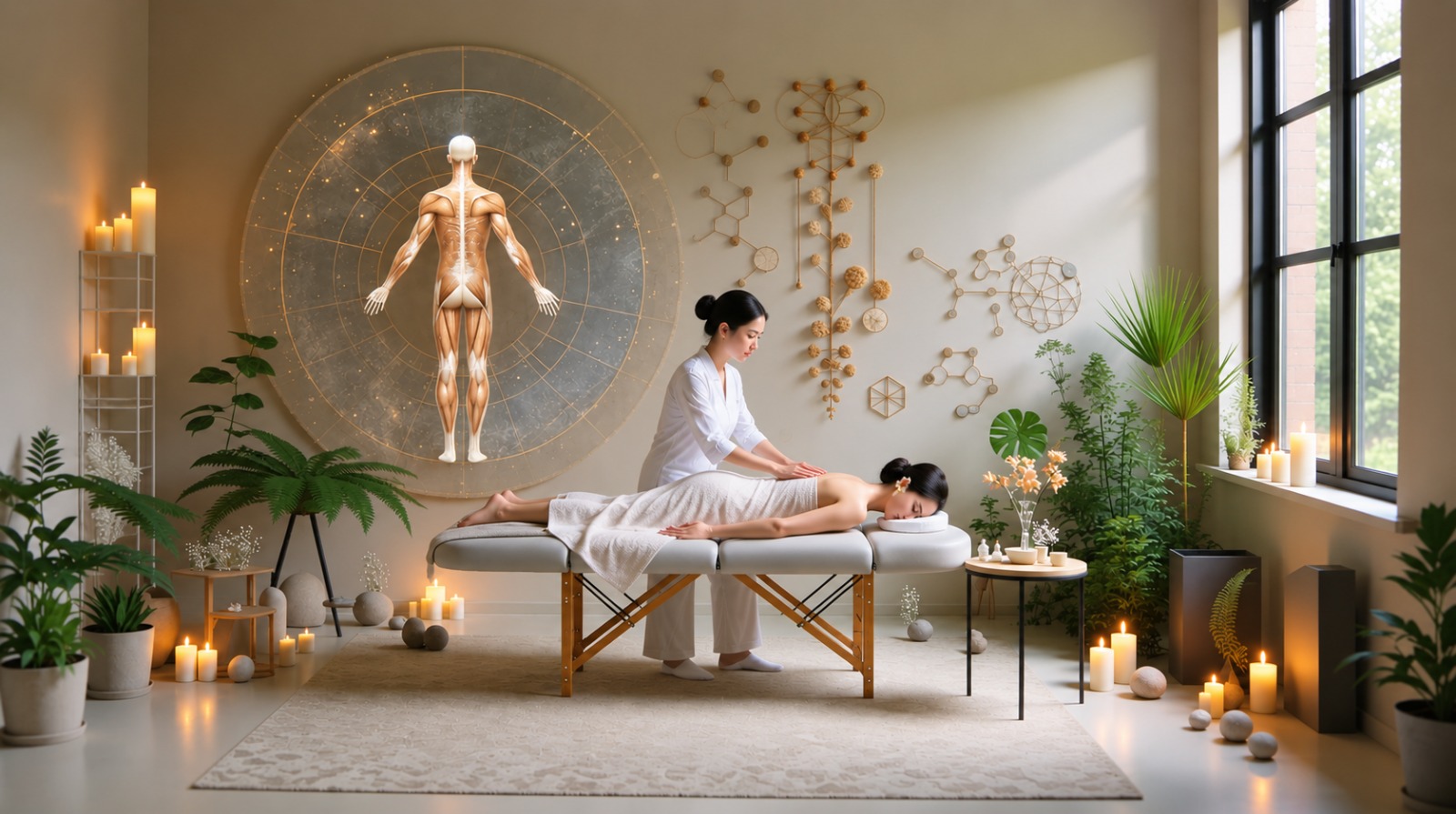
Tucked into one of Chennai’s fastest-growing residential and IT hubs, Pallikaranai has quietly become a go-to destination for people seeking relief from the daily grind long commutes, desk jobs, and the general chaos of city living. Among the wellness options gaining popularity here, Thai massage pallikaranai,chennai stands out for a simple reason: it doesn’t just relax you, it works on your body the way physiotherapy and yoga do, combined into one session.
This guide breaks down what Thai massage actually is, the science behind why it works, what to expect during a session, and how to choose a good spa in Pallikaranai.Unlike massages that focus purely on relaxation, Thai massage blends deep pressure therapy with active stretching, making it feel more like a full-body reset than a luxury add-on. It’s no surprise that more residents and professionals in Pallikaranai are turning to it not as an occasional treat, but as a regular part of how they manage stress and stay physically functional in a demanding city lifestyle.
This guide breaks down what Thai massage actually is, the science behind why it works, what to expect during a session, and how to choose a good spa in Pallikaranai.
A Quick Look at Where Thai Massage Comes From
Ancient origins: Thai massage, known traditionally as Nuad Boran, is believed to be over 2,500 years old.
Cross-cultural roots: It draws from Ayurvedic medicine from India and traditional Chinese medicine, blended together with local Thai healing practices over centuries.
Temple beginnings: It was historically practiced in Buddhist temples, often by monks, as a form of physical and spiritual healing rather than a luxury indulgence.
Attributed founder: Thai tradition credits Shivago Komarpaj, said to have been a physician connected to the Buddha’s time, as a foundational figure in the practice’s development.
A holistic philosophy: Unlike massage styles built purely around muscle relief, Nuad Boran was designed to balance the body’s energy pathways, aiming to treat the whole person body, breath, and mind rather than just isolated aches.
Global recognition: Today it’s recognized by UNESCO as part of Thailand’s Intangible Cultural Heritage —a nod to how deeply this practice is woven into Thai identity.
What Makes Thai Massage Different?
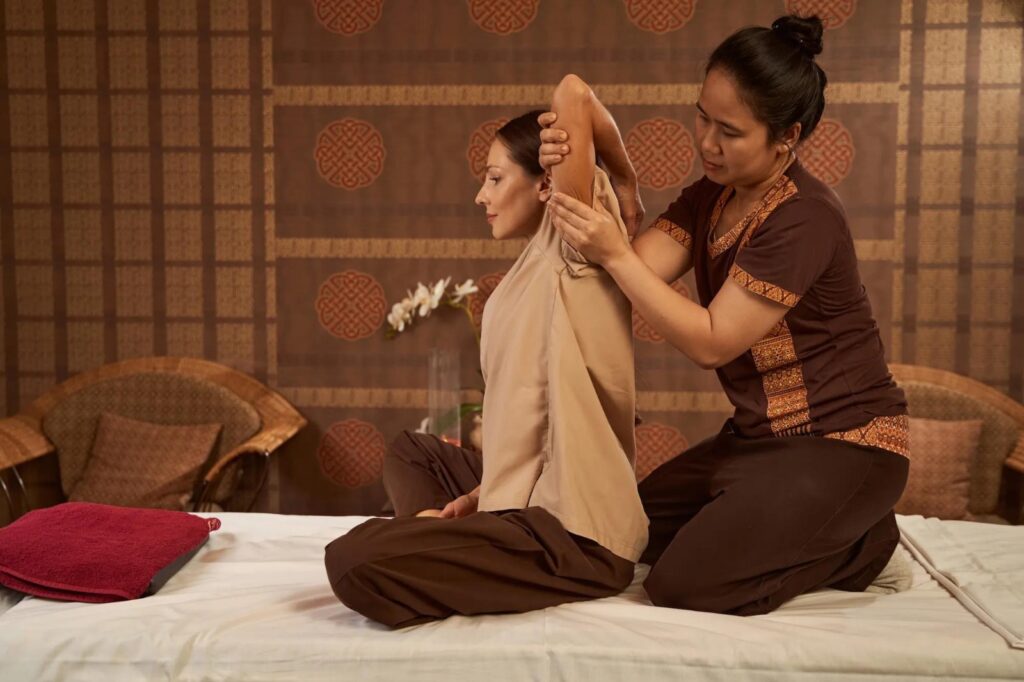
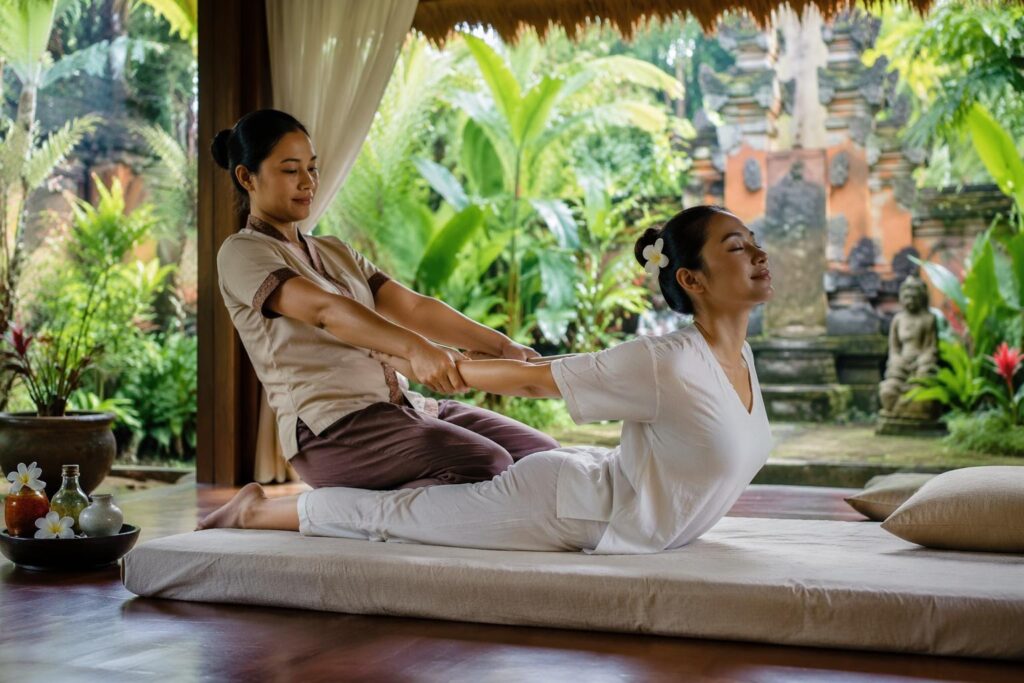
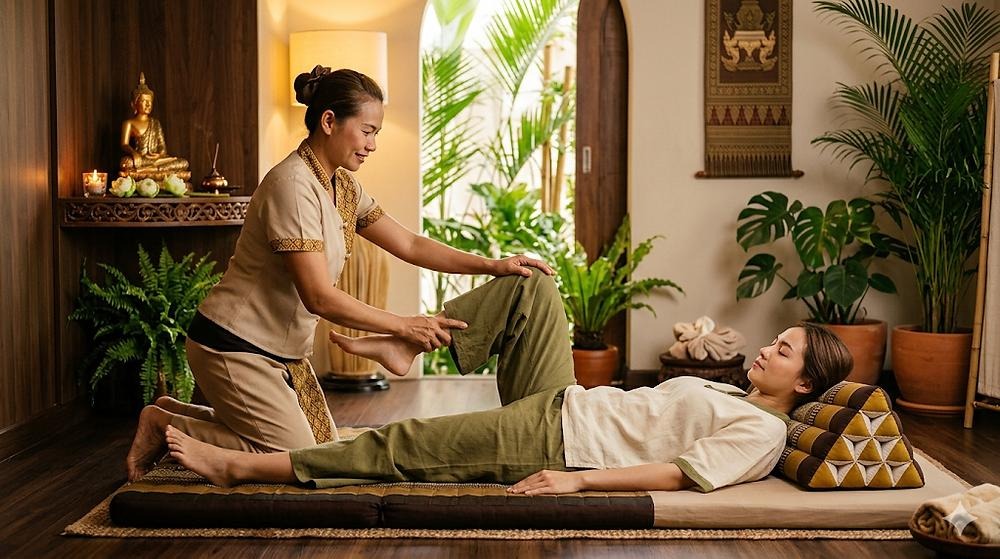
Unlike a typical oil massage where you lie still while someone works on your muscles, Thai massage is an active, full-body practice. The therapist uses their hands, elbows, knees, and even feet to apply pressure along the body’s energy lines (called Sen lines in Thai tradition), while also guiding you through assisted stretches similar to yoga poses.
You stay fully clothed, usually lying on a padded mat on the floor rather than a table, and the session often feels less like a spa treatment and more like a guided stretching and pressure-therapy routine.
The Science Behind the Serenity
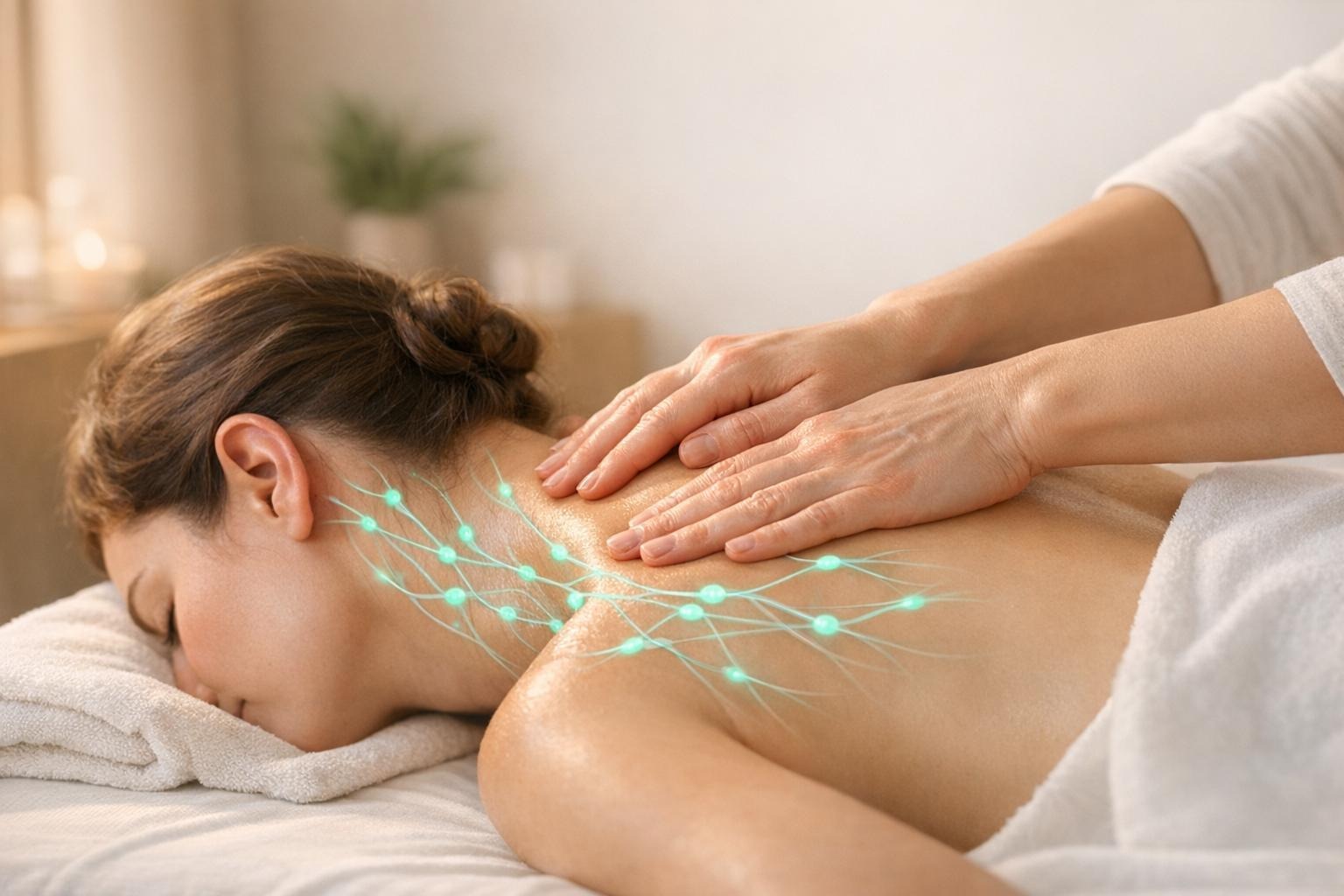
Thai massage’s popularity isn’t just about tradition there’s real physiology behind why people walk out feeling lighter and looser.
1. Improved Circulation
The rhythmic compressions used in Good Thai massage stimulate blood flow to muscles and joints, helping deliver oxygen and nutrients more efficiently while flushing out metabolic waste that builds up from sitting or standing for long hours.
2. Increased Flexibility and Joint Mobility
The assisted stretching component works similarly to passive yoga it gently pushes joints and muscles slightly beyond their usual resting range, which over repeated sessions can improve flexibility and reduce stiffness, especially in the hips, shoulders, and lower back.
3. Muscle Tension Release
Sustained pressure on tight muscle groups helps release trigger points the same principle used in deep tissue and myofascial release therapy which is particularly useful for people dealing with tech-neck, tension headaches, or lower back pain from desk work.
4. Nervous System Reset
The slow pacing, deep pressure, and rhythmic movement activate the parasympathetic nervous system (your “rest and digest” mode), which is why people often report feeling calm, even a little sleepy, after a session this is the body shifting out of stress mode.
Popular Styles of Thai Massage You Might Find in Pallikaranai
Not all Thai massage is the same spas often offer variations depending on what you’re looking for:
- Traditional Thai Massage (Nuad Boran): The classic full-body mat-based massage combining pressure-point work and assisted stretching.
- Thai Oil Massage: A gentler, more relaxing version that uses aromatic oils with lighter pressure, closer to a Swedish massage but with Thai stretching elements.
- Thai Foot Massage: Focused entirely on the feet and lower legs, based on reflexology principles great for people who are on their feet all day or dealing with foot fatigue.
- Thai Herbal Compress Massage: Uses heated pouches filled with herbs like lemongrass, turmeric, and tamarind, pressed against the body to combine heat therapy with massage particularly good for muscle soreness and joint pain.
- Table-Based Thai Massage: A modern adaptation for people who find floor-mat sessions physically difficult, offering the same techniques on a massage table instead.
Knowing these variations can help you pick the right session depending on whether you want deep therapeutic work or a lighter, more relaxing experience.
What to Expect During Your Session
If you’re trying Thai massage in pallikaranai for the first time, here’s a general idea of how it typically goes:
- Duration: Sessions usually run 60 to 90 minutes, though some spas offer shorter express options.
- Attire: You’ll be given loose, comfortable clothing to change into no need to undress.
- Setting: Most traditional Thai massage is done on a mat on the floor, though some spas in Pallikaranai offer table-based versions for added comfort.
- Technique flow: The therapist typically starts with the feet and legs, working upward through the back, arms, shoulders, and neck, incorporating stretches throughout.
- Pressure levels: You can usually request lighter or firmer pressure don’t hesitate to communicate this at the start.
It’s normal to feel a bit of soreness for a day afterward, similar to how you’d feel after a good workout this usually fades quickly and is often followed by noticeably looser muscles.
Who Benefits Most from Thai Massage?
- IT and desk professionals dealing with shoulder, neck, and lower back stiffness from long hours at a screen.
- People with sedentary lifestyles looking to improve mobility and counter the effects of prolonged sitting.
- Athletes or active individuals wanting faster muscle recovery and improved range of motion between training sessions.
- Anyone dealing with chronic stress, since the therapy doubles as a mental reset alongside the physical benefits.
- New mothers (post-recovery), once cleared by a doctor, looking to ease tension built up from feeding, carrying, and disrupted sleep.
- Frequent travelers, since the stretching and circulation-boosting techniques help counter stiffness from long flights or drives.
- People recovering from minor injuries, once cleared by a physiotherapist, as gentle stretching can support mobility during rehab.
- Older adults, especially with adapted, gentler pressure, since improved circulation
How to Choose a Good Thai Massage Spa in Pallikaranai
With Best wellness centers popping up across the area, a bit of due diligence goes a long way:
- Check for trained therapists. Authentic Thai massage requires proper technique ask if therapists are trained in traditional Thai massage methods, not just generic spa massage.
- Read recent reviews. Look for consistency in feedback about hygiene, professionalism, and technique quality.
- Ask about pressure customization. A good spa will always check in about your comfort level rather than applying a one-size-fits-all approach.
- Prioritize hygiene standards. Clean linens, sanitized mats, and a tidy space are non-negotiable basics.
- Avoid rock-bottom pricing. Thai massage requires skill and time; prices that seem too low compared to the local average are often a red flag for shortened sessions or undertrained staff.
5 Signs You Need a Thai Massage
Not sure if it’s time to book a session? Here are some common signs your body might be asking for one:
| # | Sign | Why It Points to Thai Massage |
|---|---|---|
| 1 | Constant neck and shoulder stiffness | Hours of screen time and poor posture can tighten these muscles. Thai massage uses pressure and stretching techniques to target this area. |
| 2 | Lower back pain from sitting all day | Assisted stretches can support hip and spinal mobility that prolonged sitting may restrict. |
| 3 | Trouble sleeping or feeling constantly "wired" | Deep, rhythmic massage may promote relaxation and help some people prepare for restful sleep. |
| 4 | Reduced flexibility or stiff joints | Passive stretching may help improve range of motion, especially in the hips, shoulders, and hamstrings. |
| 5 | Frequent tension headaches | Releasing tight muscles in the neck, shoulders, and scalp area may help ease headache triggers associated with muscle tension. |
Who Should Be Cautious or Avoid Thai Massage
Thai massage is generally safe, but it’s not ideal for everyone. It’s worth checking with a doctor first or skipping it altogether if you:
- Are pregnant (some spas offer modified prenatal massage instead)
- Have recently had surgery or a fracture
- Have osteoporosis or fragile bones
- Have a herniated disc or serious spinal condition
- Have deep vein thrombosis or clotting disorders
- Have an active skin infection, open wound, or fever
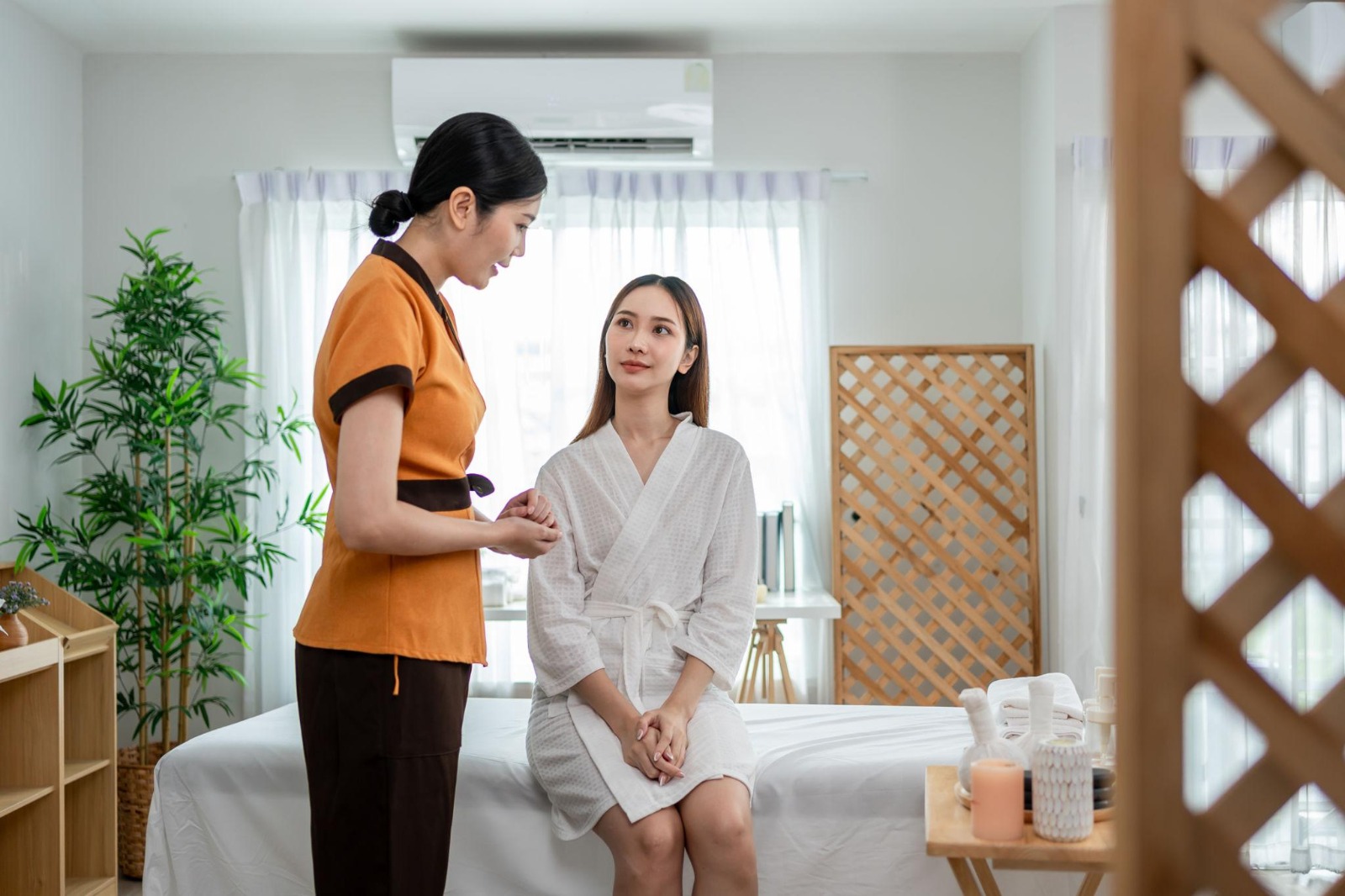
Always inform your therapist about any existing medical conditions before the session begins so they can adjust pressure and avoid certain stretches.
Frequently Asked Questions
1.How often should I get a Thai massage?
For general stress relief, once every 2–4 weeks is common. If you’re targeting a specific issue like chronic back pain, weekly sessions for a short period may help, followed by a maintenance schedule.
2.Does Thai massage hurt?
It can involve firm pressure and deep stretching, so some discomfort is normal, especially in tight areas. It shouldn’t be sharply painful always tell your therapist if it feels like too much.
3.Can I get a Thai massage if I’ve never done yoga or stretching before?
Yes. The stretches are assisted and controlled by the therapist based on your flexibility, so no prior experience is needed.
4.How is Thai massage different from a regular deep tissue massage?
Deep tissue massage focuses purely on muscle pressure while you stay still. Thai massage combines pressure work with active, yoga-like stretching, making it more of a full-body movement therapy.
5.Is Thai massage good for lower back pain from sitting all day?
Yes, it’s one of the most commonly recommended massage styles for desk-related stiffness, since the stretching component directly targets hip and spinal mobility that sitting restricts.
Final Thoughts
Thai massage in Pallikaranai offers something increasingly rare in city life – a full reset for both body and mind, backed by centuries of practice and a growing body of modern research on its physiological benefits. Whether you’re managing chronic tension from work, recovering from physical activity, or simply need an hour of genuine stillness, it’s worth experiencing at least once.
If you’re new to it, go in with an open mind, communicate your pressure preferences clearly, and give your body a day to adjust afterward – most people find it’s a habit worth keeping.Book Your Spa Experience .